
A screen that cracks or a battery that drains fast often shows up during quiet moments. Then it waits until you truly need your phone. In Australia, some iPhone owners run into the same trouble. You might go to an Apple Store. You might also use a repair business near you. Either choice can get your iPhone working again. Still, the fees may not match. Repair time can change too. Coverage rules can be different. Even the parts might not be identical.
Here is a quick side-by-side look at Apple Store repairs vs a local shop. It lists key points, so you can pick what fits your budget, your timing, and your iPhone model.
Why Choosing the Right Repair Service Matters
Picking where you get an iPhone fixed changes more than the bill. It can affect how soon you get the phone back. It can also affect your photos and saved data. You may also want to know if the device still counts for later Apple support. And you should think about how solid the repair is over time.
Choosing the wrong path can mean extra cost later. You might have to pay for another fix if the first one does not hold. Some fixes can also reduce what your warranty covers. In a few cases, the phone may not feel the same after the work. That is why it is smart to read what each shop will do before you book.
Here are two common examples. A student drops a two-year-old iPhone the day before a test. They need it back quickly. Yes, the price matters, but the main focus is speed. Another example: a person is on vacation, and a six-month-old iPhone gets a cracked screen. That phone is still under AppleCare+, and they want the repair to keep that coverage. These situations both start with a damaged screen. Still, the best choice is not the same. First, match the case to your own needs. Then pick the repair place that fits that need.
Apple Store Repairs Explained
How Apple repairs work
Fixes at Apple Stores are handled in two ways. Apple team members do some work on site. Other repairs go through the approved repair network, which includes Apple Authorised Service Providers. Most people set up a visit on the Apple support page. Then they get an appointment. Many in-store trips also need time at the Genius Bar.
Benefits of Apple-authorised service
Getting help at an Apple Store or an Apple Authorised Service Provider can be a solid way to get your iPhone fixed. A trained team takes your phone apart and repairs it. They use Apple tools to test the issue and figure out what needs fixing. The part that gets swapped is an original Apple part. After the work is done, you get Apple’s repair guarantee too. If your device is still covered under AppleCare+ or the regular Apple warranty, this route often feels like the safest pick. It tends to help your coverage stay valid.
Typical repair process
- Book an appointment (in-store or via mail-in service)
- Apple runs a diagnostic to confirm the fault
- You receive a repair quote, which may be free if the issue is covered by warranty
- The repair is completed in-store, or the device is sent away for more complex work
- You collect the device once the repair and any software checks are complete
Local Repair Shops Explained
Independent repair services
You can find local phone repair stores in many parts of Australia. Most are run by independent owners. They fix phones on site, and they are not limited to Apple models. In many suburbs and in shopping centres, walk-in service is common. You often do not need to book ahead.
Common repair offerings
Some small shops nearby will fix iPhone screen issues. They often change old batteries as well. A lot of them will also replace a worn-out charging port. Some shops take care of cracked back glass. Many also offer data recovery services that Apple doesn’t provide in-store. At Smartfone, for example, most of these repairs are carried out in-house the same day, using parts sourced and quality-checked before they go into any device.
Same-day repair advantages
Local stores often keep common parts like screens and batteries right there. So many fixes, especially screen and battery swaps, can take only one or two hours. You can wait in the shop instead of losing your phone for days.
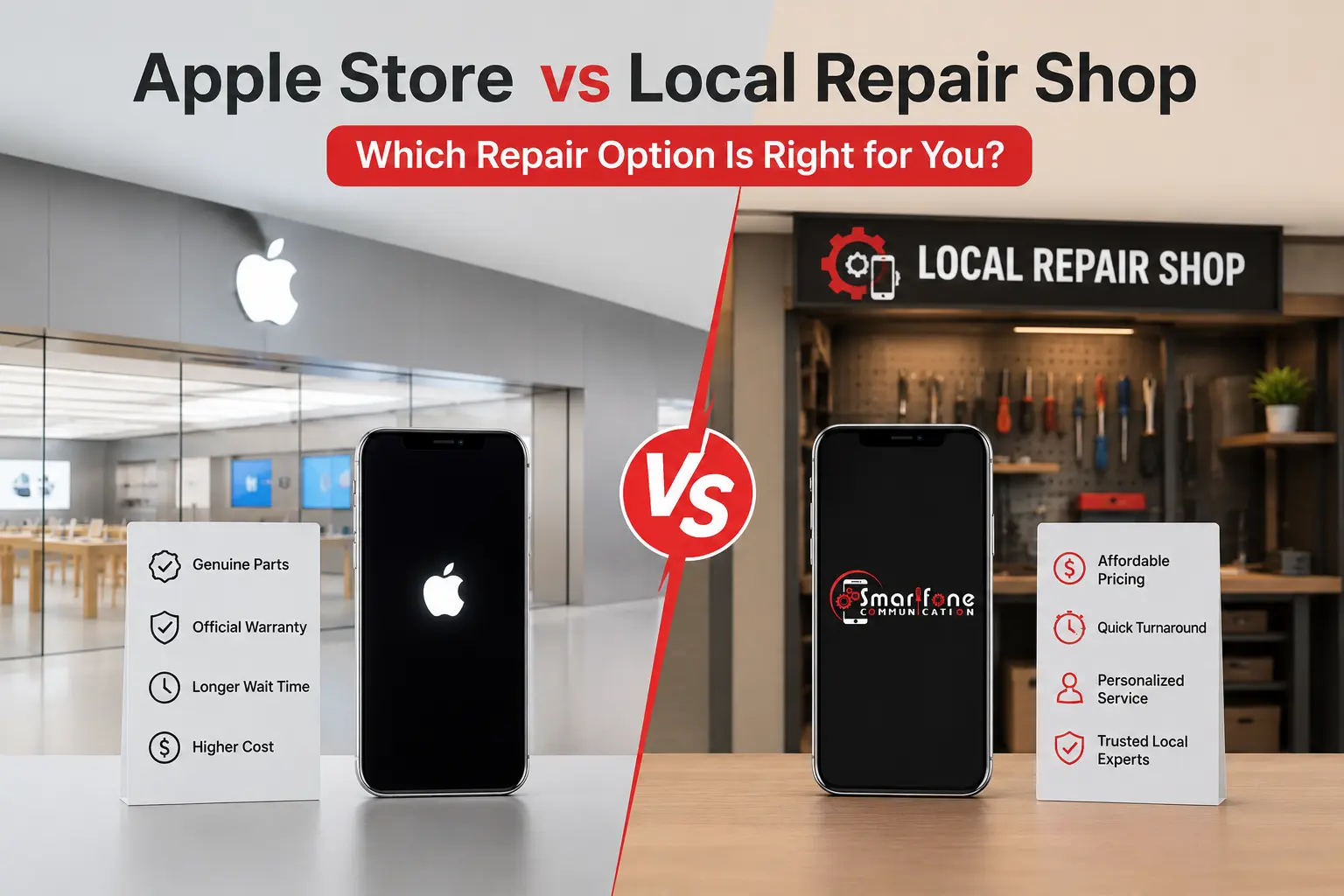
Apple Store vs Local Repair Shop: Side-by-Side Comparison
| Factor | Apple Store | Local Repair Shop |
| Cost | Higher | Usually Lower |
| Repair Time | Days to Weeks | Same Day in Many Cases |
| Appointment Needed | Often Yes | Usually No |
| Warranty | Apple Warranty | Shop Warranty |
| Convenience | Limited Locations | Widely Available |
| Data Risk | Low | Depends on Provider |
Cost Comparison
Repair costs shift based on the exact phone and what is broken. Still, some patterns show up in Australia.
- Screen repairs: If you check the Apple Store first and your warranty is not active, the cost is often more than you get from nearby repair shops. On older iPhone models, the difference can be wider. Independent techs can sometimes buy and fit cheaper screen parts.
- Battery replacements: Apple charges a set fee when the warranty is not active. Many local shops ask for less for a battery change. You will notice this most on iPhones from earlier model years.
- Charging port fixes: Apple does not always treat a bad charging port as one small, separate job. At times, they replace a larger internal section. Local shops tend to focus on the charging port itself. That can help keep the total price down.
- Back glass repairs: Apple can charge a lot for models with a glass back. The phone design can make the work more costly. Independent shops often quote a lower price when you only need the back glass repaired.
In most cases, the gap in price is bigger for older iPhones. For the newest models, the gap tends to shrink. That is because Apple parts that are made for the device and the proper tools cost more.
You should also think about the checks before the fix. Apple’s in-store diagnostic is usually free. If the phone ends up being under warranty or AppleCare+, you might pay nothing for the work. You may still need to cover an excess fee. Many local repair places give a price right after a short look. They often do not charge extra just for the diagnosis if you accept the repair. When you compare options, find out if the quote includes labour, parts, and any screen tuning that is needed. For example, True Tone may need recalibration after a screen swap. Some shops list these items separately, so it helps to ask.
Repair Time Comparison
Appointment wait times
Apple Store appointments, particularly around school holidays or after a new iPhone launch, can be booked out for several days. Mail-in repairs through Apple typically take longer, often a week or more once shipping is factored in.
Walk-in services
Most local repair shops don’t require a booking. You can usually walk in, get a quote on the spot, and have the device assessed immediately, which suits people who need a fast turnaround.
Emergency repairs
For urgent situations, such as a shattered screen the day before travel, local repair shops generally have the edge, since same-day or even while-you-wait service is common for standard repairs like screens and batteries.
Parts Quality Comparison
Genuine Apple parts
Apple and its Authorised Service Providers use genuine Apple parts sourced directly from Apple’s supply chain. These are built to match the original specifications exactly, including features like True Tone display matching.
OEM parts
Some independent repair shops use OEM (original equipment manufacturer) parts, sourced from the same manufacturers that supply Apple’s original components, without going through Apple’s authorised channel. Quality here can be close to genuine, though results vary by supplier.
High-quality aftermarket parts
Other local shops use aftermarket parts built to Apple’s original specifications by third-party manufacturers. Quality ranges widely between suppliers, so it’s worth asking your repairer what grade of part they use before booking, particularly for screens and batteries.
Warranty and Support
Apple Store and Apple Authorised Service Provider repairs include a repair warranty from Apple. If your coverage is still active, using this route helps keep your device eligible for AppleCare+ and later Apple support. Independent repair shops handle their own warranties. Their timelines can be short, like a few weeks, or longer, like a year or more. That warranty is separate from Apple’s terms, and it does not bring back Apple warranty eligibility. Before you say yes to any repair, check the exact warranty dates and what they include. For example, ask if the warranty covers parts only, or parts plus labour.
When You Should Choose an Apple Store
An Apple Store or Apple Authorised Service Provider is generally the better fit if:
- Your iPhone is still under Apple warranty or AppleCare+
- You want to guarantee genuine Apple parts and official diagnostics
- The fault involves something complex, like water damage affecting internal components
- You’re planning to sell or trade in the device and want to preserve full Apple support eligibility
When a Local Repair Shop Makes More Sense
A local repair shop is often the more practical choice when:
- Your iPhone is out of warranty, and cost is a priority
- You need the phone back the same day
- There’s no Apple Store or Authorised Service Provider nearby
- You’re after a specific fix, like a charging port repair, that doesn’t require replacing a larger assembly
Questions to Ask Before Choosing Any Repair Service
Whichever option you’re leaning toward, it’s worth asking:
- What type of replacement parts do you use, genuine, OEM, or aftermarket?
- What warranty comes with the repair, and does it cover parts and labour?
- Will my data be backed up or protected during the repair?
- How long will the repair take, and is there a loan device available if I need to leave my phone?
- Is there an upfront diagnostic fee if I decide not to proceed with the repair?
Real-World Repair Scenarios
Scenario 1: Cracked screen, phone still under AppleCare+. An iPhone 16 owner drops their phone six months after purchase, cracking the screen but leaving the phone otherwise functional. Because AppleCare+ is active, booking through the Apple Store keeps the repair covered under the existing plan, with only an excess fee to pay. Taking it to a local shop instead would void that cover for future claims, even if the immediate repair is cheaper.
Scenario 2: Battery health dropping on a four-year-old iPhone. An iPhone 12 out of warranty is showing reduced battery health and shutting down unexpectedly. With no warranty to protect it, cost and speed become the priority. A local repair shop can usually swap the battery same-day at a lower price than Apple’s out-of-warranty rate, getting the phone back to full-day battery life without a multi-day wait.
Scenario 3: Charging port not holding a cable steady. An iPhone 13 has a loose charging port after years of daily use, but is otherwise in good condition and out of warranty. Apple may quote for a broader internal repair, while a local shop specialising in component-level repairs can often replace just the charging port itself, a faster and more targeted fix.
These examples highlight the same pattern: warranty status and urgency tend to be the two biggest factors in deciding which provider makes sense.
Final Verdict
There’s no single right answer in the Apple Store vs local repair shop comparison, it comes down to what matters most for your situation. If your iPhone is still under warranty or you want the certainty of genuine parts and Apple-backed service, the Apple Store is the safer route. If you’re after a faster, more affordable fix and your warranty has already lapsed, a reputable local repair shop can get you back up and running the same day, often for a fraction of the cost.
“Ready to get your iPhone repaired? Request a free repair quote from Smartfone today, or visit our repair pricing page to compare costs for your specific model before you book.”
Frequently Asked Questions
In most cases, yes. Local repair shops generally charge less than Apple’s out-of-warranty repair pricing, particularly for screen and battery replacements on older iPhone models.
Standard Apple warranty doesn’t cover accidental screen damage. AppleCare+ does cover screen repairs, though it’s subject to an excess fee per incident. Without AppleCare+, screen repairs are charged at Apple’s out-of-warranty rate.
Reputable local repair shops are safe to use, but quality varies between businesses. Look for shops with clear warranty terms, transparent pricing, and good customer reviews before booking a repair.
Some do; others use OEM or high-quality aftermarket parts instead. It’s worth asking directly what type of part will be used in your repair, since this affects both price and long-term performance.
Yes, many local repair shops offer same-day or while-you-wait service for common repairs like screen and battery replacement, since they typically stock these parts on-site. Apple Store same-day service depends on appointment availability and stock at your local store.